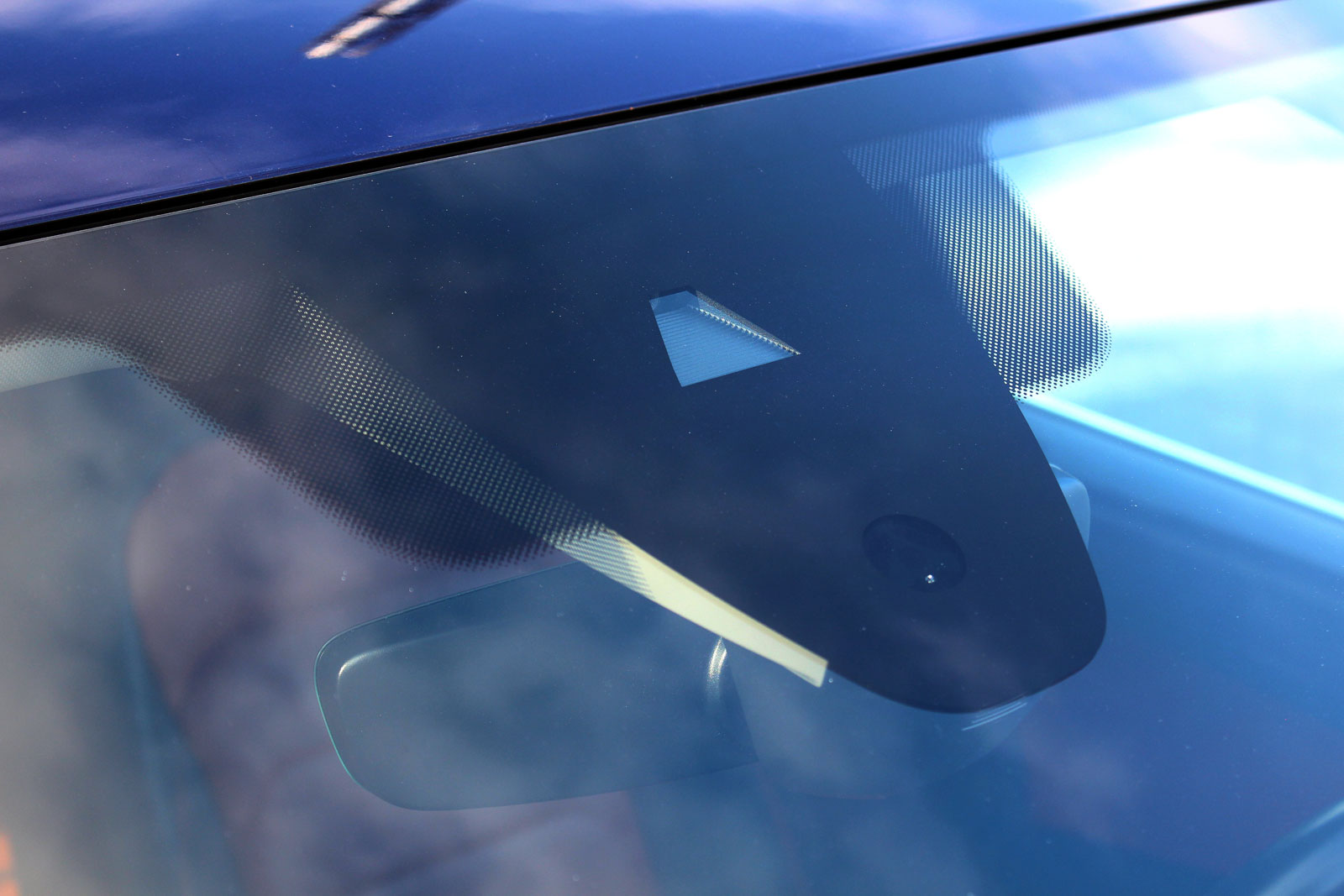
If your car has lane departure warning, lane keep assist, adaptive cruise control, forward collision warning or automatic emergency braking, it has a camera mounted to the windshield behind the rear-view mirror. When the windshield is replaced, that camera needs to be recalibrated. Most manufacturers require it, most insurers cover it, and the cheapest windshield quotes tend to leave it out.
What the camera does
The forward camera reads lane lines, detects vehicles and pedestrians, and measures distance to the car ahead. It does this by comparing what it sees against a calibrated reference: the system knows exactly where the camera is pointed relative to the car's centreline and the road. That reference is set at the factory or at the last calibration.
Why a new windshield changes it
The camera mounts to a bracket bonded to the glass. New glass, even an identical OEM part, sits a fraction of a millimetre differently in the frame, and the bracket sits with it. A tiny angular change at the camera becomes a large positional error a hundred metres down the road. The result is a lane keep system that thinks the lane is half a metre to the left of where it is, or an emergency braking system that measures the car ahead as further away than it is. Some vehicles throw a warning light; many do not. The system just quietly works less well.
Static vs dynamic calibration
Static calibration happens in the shop. The car sits on a level floor, a manufacturer-specified target board is placed at a precise distance and height in front of it, and a scan tool tells the camera to learn where the target is. It takes 30 to 60 minutes after the glass is set. Many Honda, Toyota, Subaru, Hyundai and Kia models use this method.
Dynamic calibration happens on the road. The scan tool puts the camera in learning mode and a technician drives at a steady speed on roads with clear lane markings until the system confirms it has calibrated, typically 20 to 40 minutes. Many Ford, GM, Mazda and European vehicles use this. Some vehicles need both.
The method matters for mobile service: a dynamic calibration can follow a driveway installation, while a static calibration needs the shop's targets and floor. We tell you which your vehicle needs when you book. More on ADAS calibration.
What it costs, and who pays
Calibration adds time and equipment to a windshield job, and it is priced separately from the glass. On a comprehensive insurance claim, most Canadian insurers cover it as part of the windshield replacement, because the manufacturer requires it. If you are paying out of pocket, ask for the calibration to be quoted with the glass so there are no surprises.
The quote that leaves it out
If one windshield quote is much lower than another, calibration is the usual reason. Some shops do not have the equipment; some quote the glass only and add calibration later; some skip it and hope no light comes on. Ask directly: "Does this include ADAS calibration, and will I get a printed report?" A proper calibration produces a report showing the before and after values, which is also what your insurer wants to see.
How to tell if your car needs it
Look behind the rear-view mirror from outside the car. If there is a black housing with a camera lens in it, the car needs calibration after a windshield replacement. Most vehicles from about 2018 onward have one; many from 2015 onward do. If you are unsure, tell us the year, make and model and we will check.
Common questions
Is ADAS calibration really necessary?
Yes. Every major manufacturer requires it after windshield replacement, and skipping it can leave safety systems working incorrectly with no warning light.
How long does ADAS calibration take?
Static, 30 to 60 minutes in the shop after the glass is set. Dynamic, a 20 to 40 minute road drive.
Does insurance pay for calibration?
Most Canadian insurers cover it as part of a comprehensive windshield claim.
Related
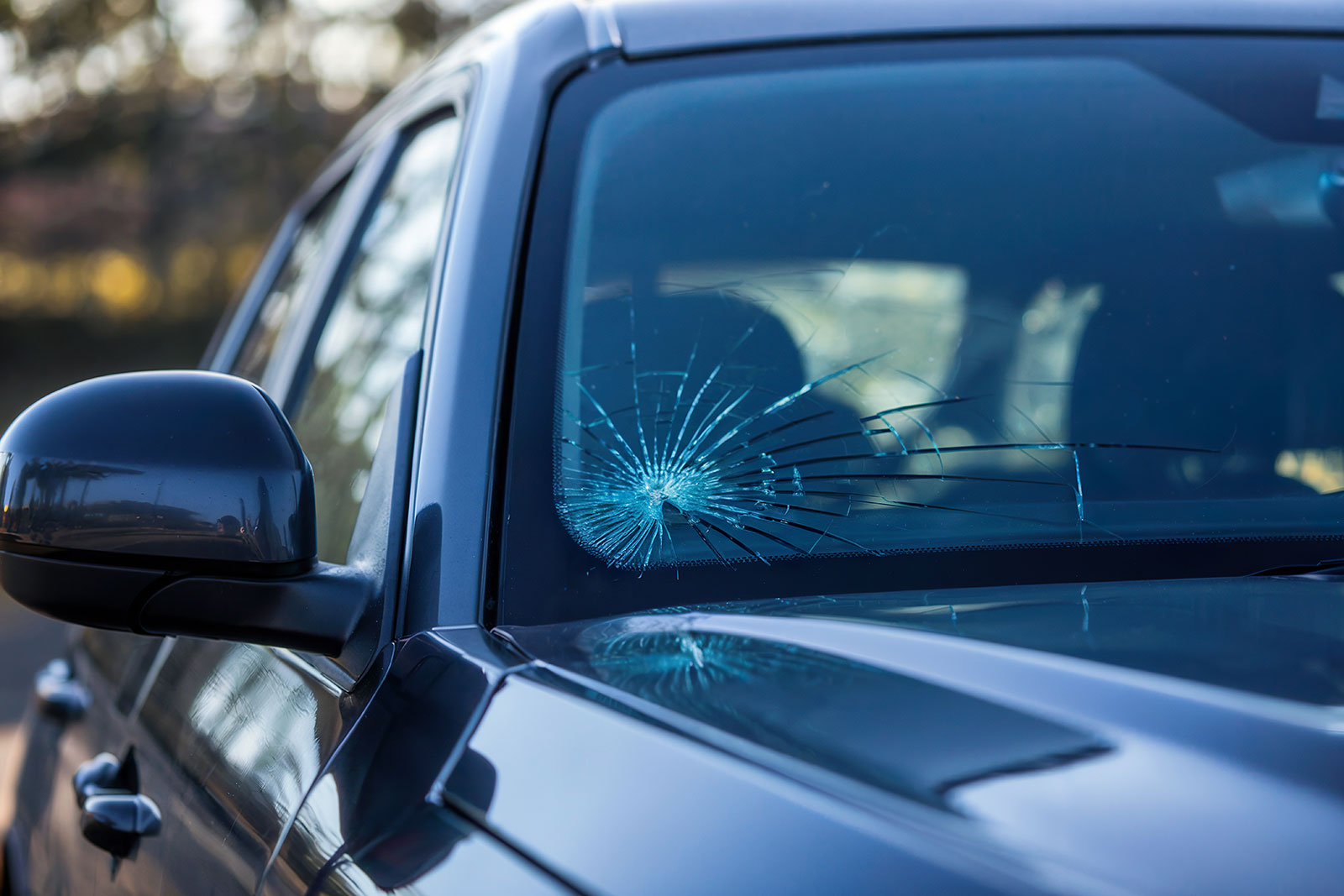
Is It Safe to Drive With a Cracked Windshield in Ontario?
A crack looks cosmetic. It is not. Here is what it does to the structure of the car, when it becomes a ticket in Ontario, and how long you realistically have before repair stops being an option.
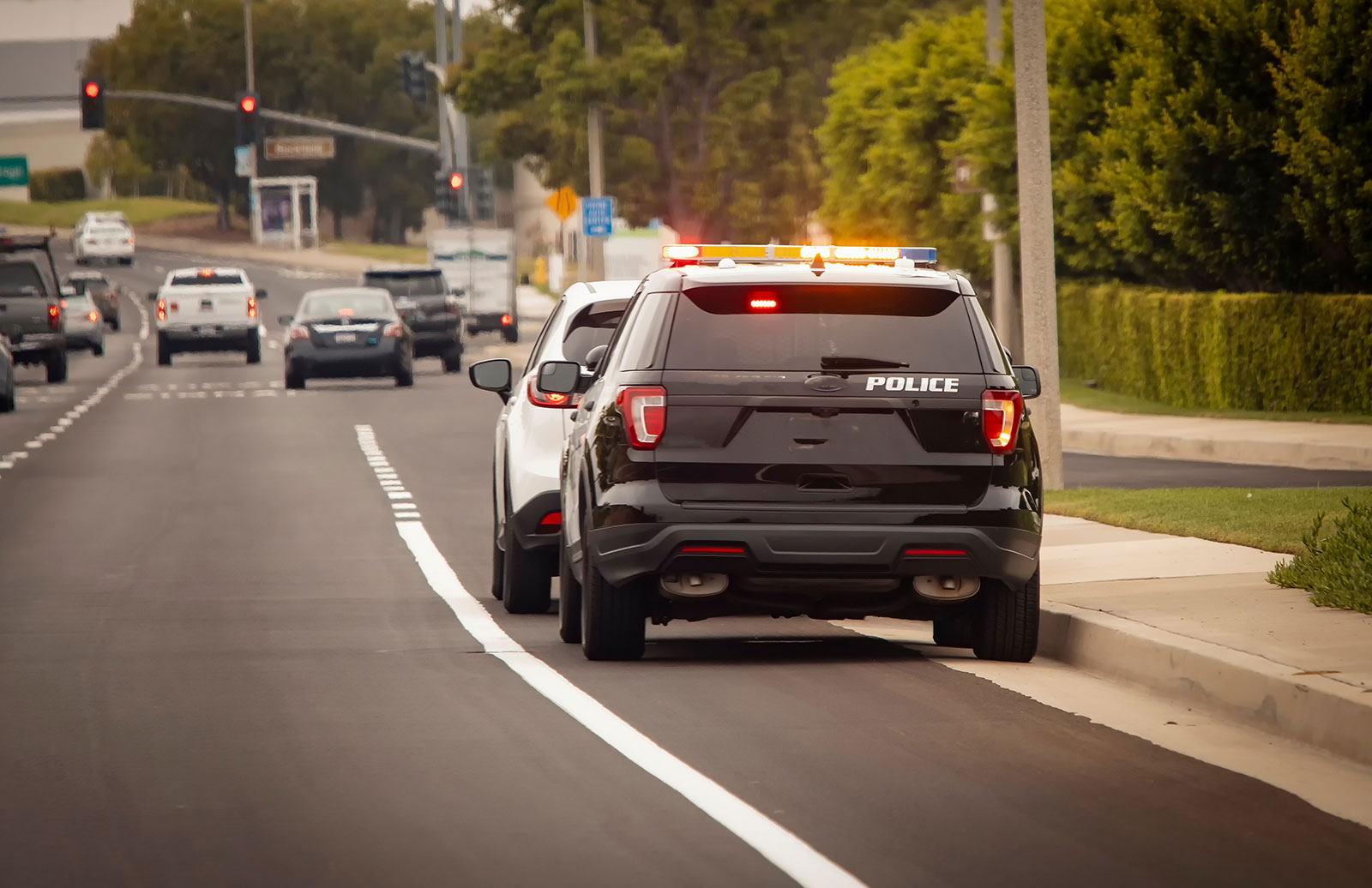
Can You Get a Ticket for a Cracked Windshield in Ontario?
Ontario does not set a crack length. It sets a visibility standard, and police apply it to the driver's side of the glass. Here is where the line is and what it costs to cross it.
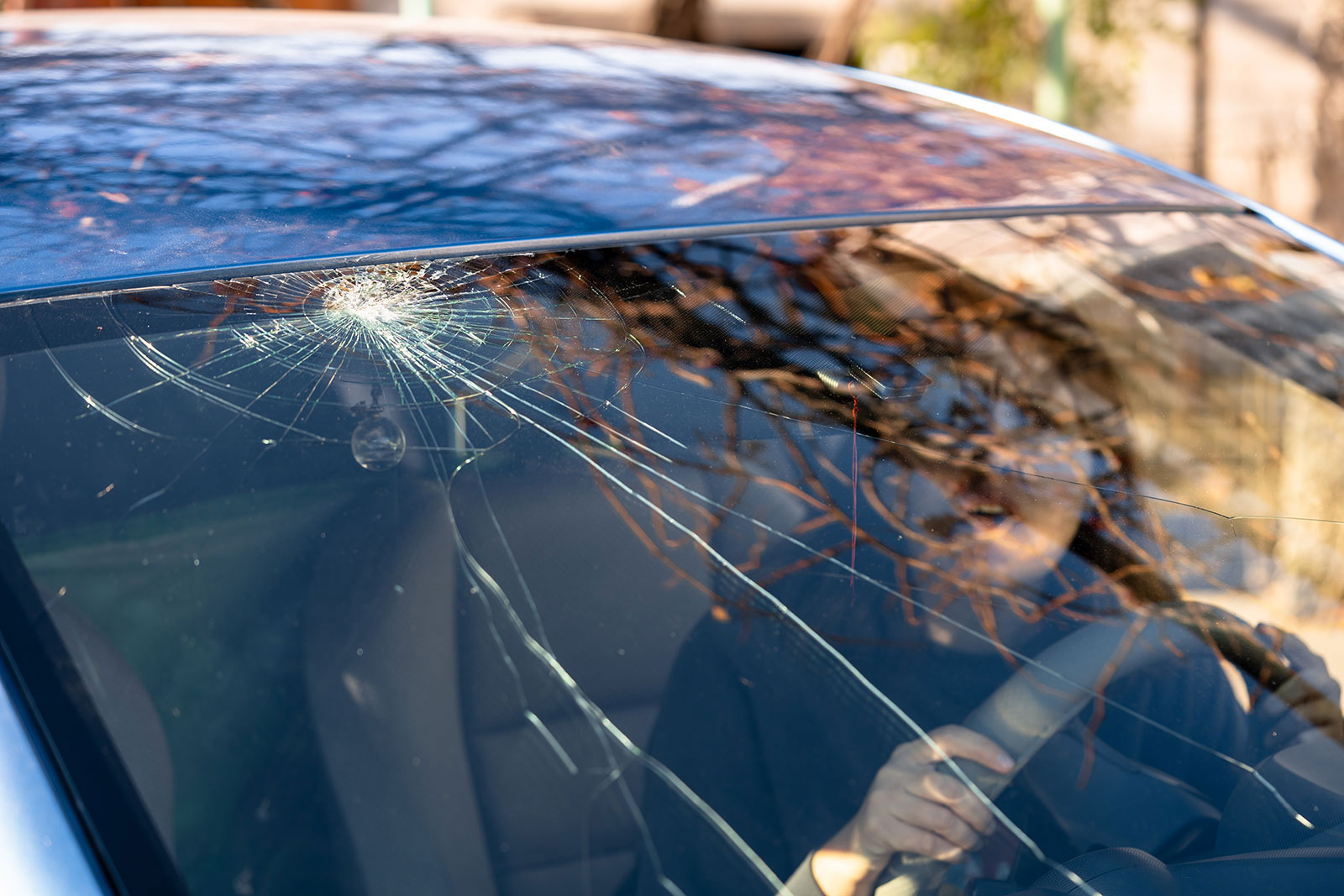
How Big a Crack Can Be Repaired on a Windshield?
Size matters less than location and age. Here are the actual limits we work to, the damage types that repair well, and the ones that do not.